Navigation System
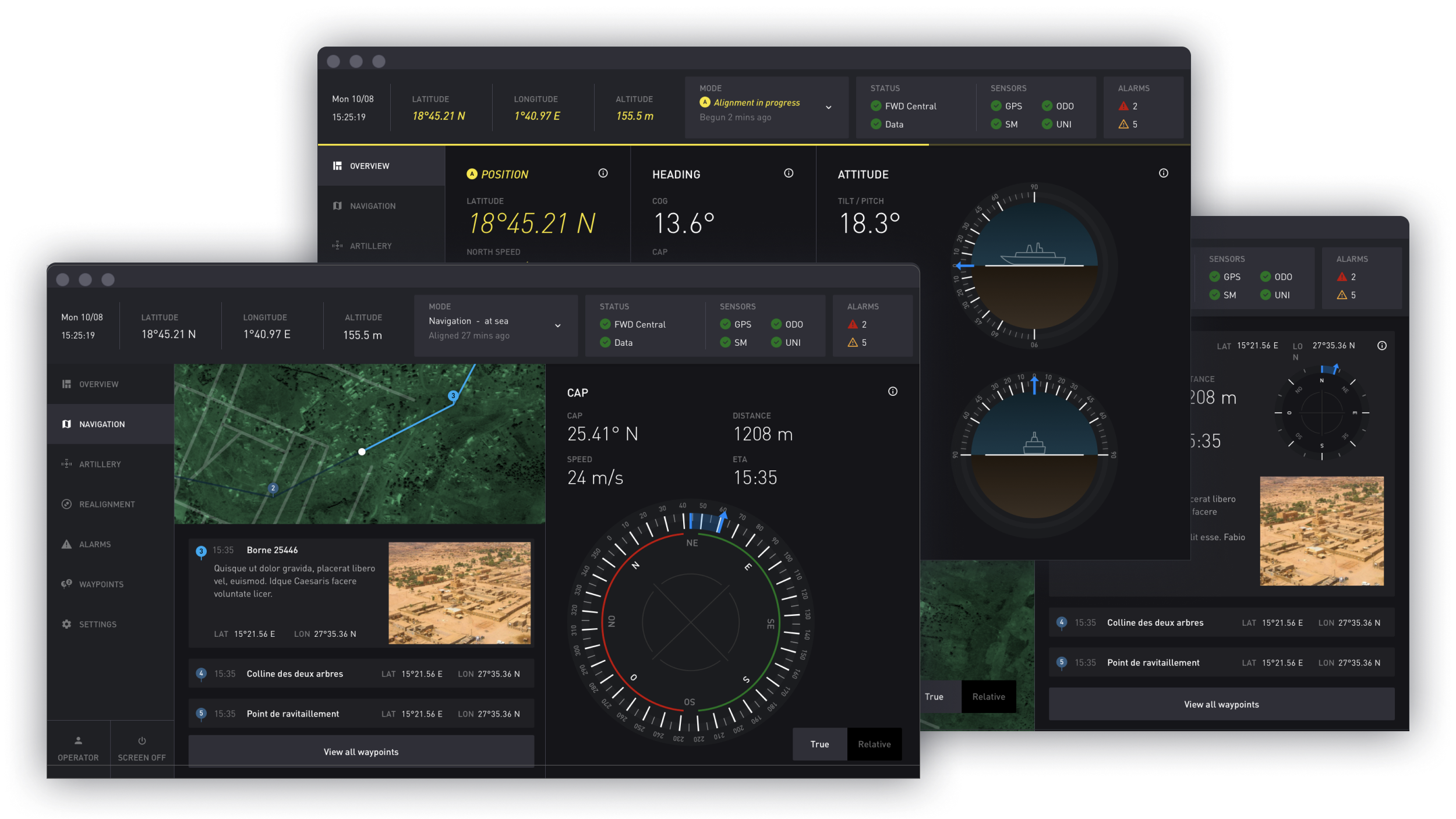
Designed the UX for a vehicle positioning system operating in low-light and GPS-denied environments, built for reliability under demanding field conditions.
Context
The client needed a new navigation system for a range of vehicles — from cars to submarines — operating in environments where standard GPS either fails or cannot be relied upon. The system had to function in low-light conditions and without network connectivity.
The constraint was unusual: we couldn't see the deployment context or the other tools the system would be used alongside, and we couldn't test with real end users. Timeline was tight.
Team
Two UX designers and one UI designer on the design side. The client team consisted of the product manager and his development team.
Methodology
Given the time constraints, we started with a detailed brief to identify the core functionalities. From there, we ran five co-conception workshops over six weeks, with wireframe iterations between each session.
After the wireframes were validated, we handed off to the UI designer who applied visual style and color. In parallel, we produced a UX guide explaining how each screen was constructed, so the development team could understand the design rationale and implement it correctly.